
On this page
Money questions don't arrive in a tidy order. One day you're wondering where your paycheque went. The next you're trying to figure out whether you should build an emergency fund, pay down debt or start investing. Later, questions about mortgages, interest rates, retirement and taxes start to matter more.
There's no shortage of financial information online, but finding advice that is practical, understandable and relevant to Canadians isn't always straightforward.
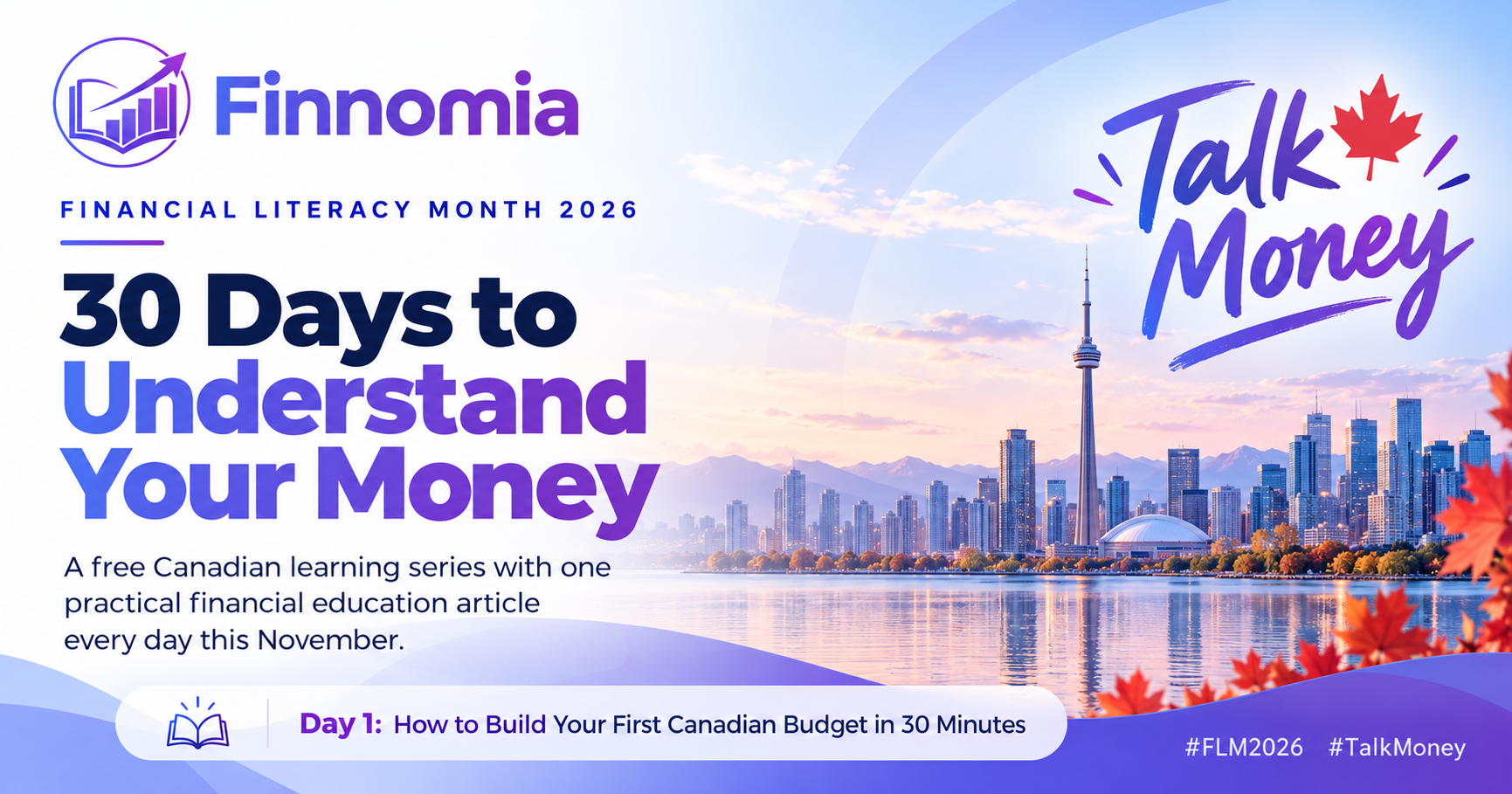
That's why Finnomia is marking Financial Literacy Month this November with 30 Days to Understand Your Money, a free learning series featuring one new article every day from November 1 through 30.
Our goal isn't to turn everyone into a financial expert in a month. It's to make the next money decision a little clearer.
Why Financial Literacy Month matters
Financial Literacy Month is a Canadian initiative led by the Financial Consumer Agency of Canada (FCAC). This year's national theme is Talk Money, encouraging people to have practical conversations about financial decisions and learn from one another.
We think that's an important idea. Money is a part of everyday life, yet people often feel they should already know how to budget, compare banking products, understand investment accounts or make a long-term plan. In reality, financial knowledge builds through questions, practice and conversation.
Our contribution is simple: approachable articles with Canadian context, realistic examples and something you can do after reading.
What we'll cover this November
November 1–7: Everyday money. We'll start with the foundations: building a first budget, understanding where money goes, making spending trade-offs, working around paydays, sharing household costs, preparing for irregular expenses and checking in on your finances each week.
November 8–14: Investing. We'll explore the basics that help Canadians ask better investment questions, including Canadian registered accounts, compound growth, fees and risk. The goal is understanding concepts, not making predictions or telling anyone what to buy.
November 15–21: Economics. Inflation, interest rates and economic news can feel abstract until they affect groceries, borrowing costs and savings decisions. We'll connect those larger ideas to everyday money.
November 22–28: Longer-term planning. We'll look at ways to connect today's choices with future priorities, including major expenses, financial goals and longer-term household planning.
November 29–30: Put it together. We'll finish with a one-page financial plan and a practical 90-day action plan to help turn information into habits.
Every lesson should lead to a useful action
A lesson that only introduces new vocabulary isn't enough. Throughout the series, we'll aim to answer three questions: What does this mean? Why should I care? What can I do with what I've learned?
Some days, that action might be looking at a month of transactions. On others, it might be understanding the cost of an investment fee, identifying an upcoming expense or starting a conversation with someone in your household about a shared financial goal.
You can follow along with a notebook, spreadsheet or whatever financial tools you already use. No Finnomia account or subscription is required.
Start with Day 1: Your first Canadian budget
Our opening lesson is How to Build Your First Canadian Budget in 30 Minutes.
It starts with the money you actually take home, makes space for real spending and predictable future costs, and walks through a practical exercise for putting together a first draft. It's designed to be a starting point you can revisit, not a rigid formula or a test you need to pass.
If you've already got a budget, the series can still help you revisit assumptions and find a simpler way to explain money concepts to someone else.
Let's talk money
To take part, read the daily lesson, try the action that fits your circumstances and share a useful insight or question with someone you trust. You don't need to disclose private numbers or financial details to have a valuable conversation.
If you're looking for a place to begin, ask: What's one money decision I'd like to understand better by the end of November?
We'll be sharing each new article across Finnomia's social channels, but the easiest way to follow along is to bookmark the 30 Days to Understand Your Money series.
Financial confidence isn't built in a single afternoon. Sometimes it starts with one useful question and a small step you can take today.
About Finnomia: Finnomia is a Canadian-built personal finance and budgeting platform. We believe accessible financial education belongs alongside useful tools, and we have committed 5% of our profits to Canadian organizations supporting financial and economic literacy.